
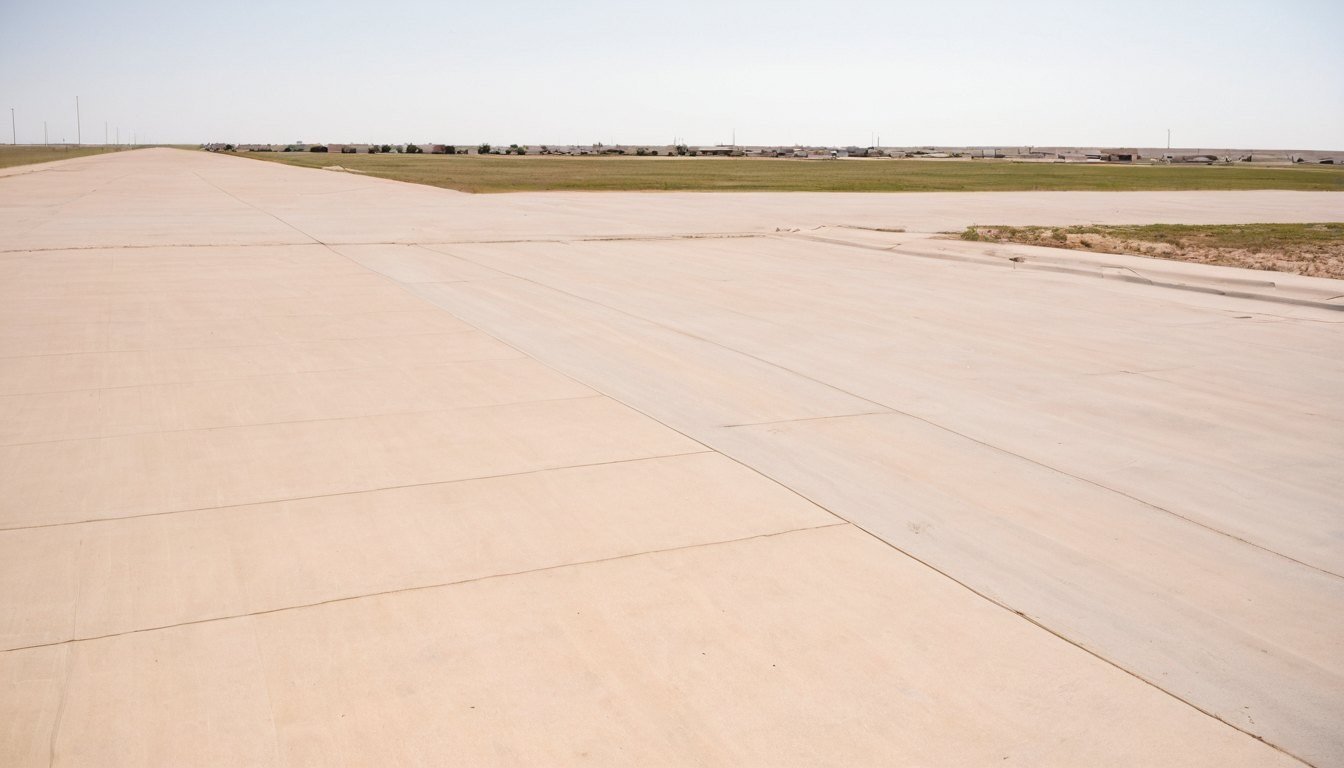
A curb is a small thing that does a big job. It protects pavement edges, keeps cars out of landscaping and steers rain toward a drain. On flat Lubbock land, where water has nowhere obvious to go, concrete curbs and gutters decide whether a parking lot drains or floods.
Lubbock Concrete builds concrete curbs and gutters for lots, shops, churches, subdivisions and driveways in Lubbock, TX and across the South Plains. We plan the slope, set the forms or run the machine and give a free written estimate.
What concrete curbs and gutters do
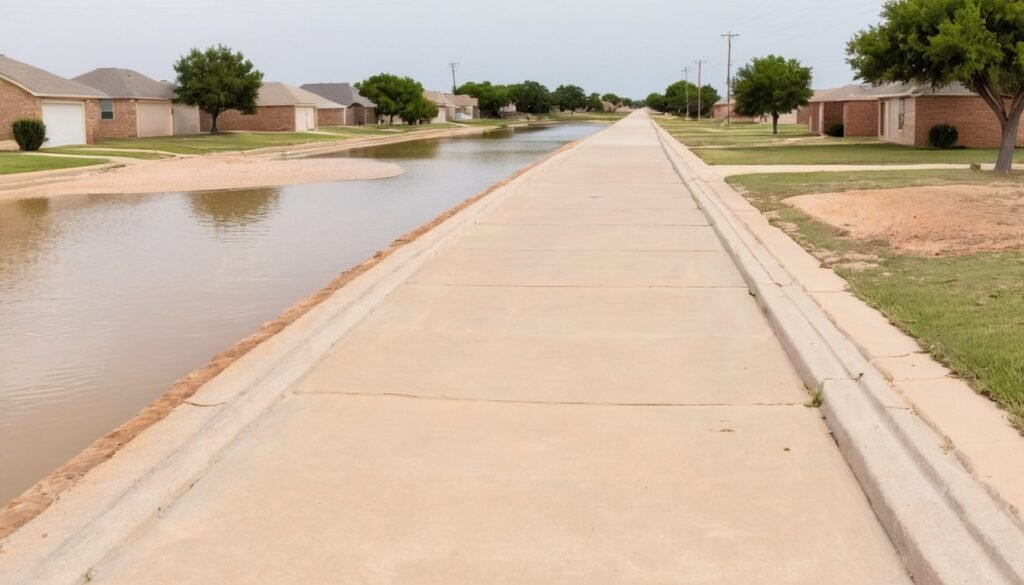
A curb is the raised edge. A gutter is the low channel beside it that carries water to an inlet. Together, they protect asphalt and concrete edges from crumbling, guide runoff, block vehicles and give a lot a clean, finished look.
Short curbs also hold back mulch, define driveways and protect landscaping. Taller curbs mark parking rows and protect sidewalks.
- Protect pavement edges
- Direct water to inlets and drains
- Keep cars off lawns and beds
- Define driveways and parking rows
How we form and pour concrete curbs
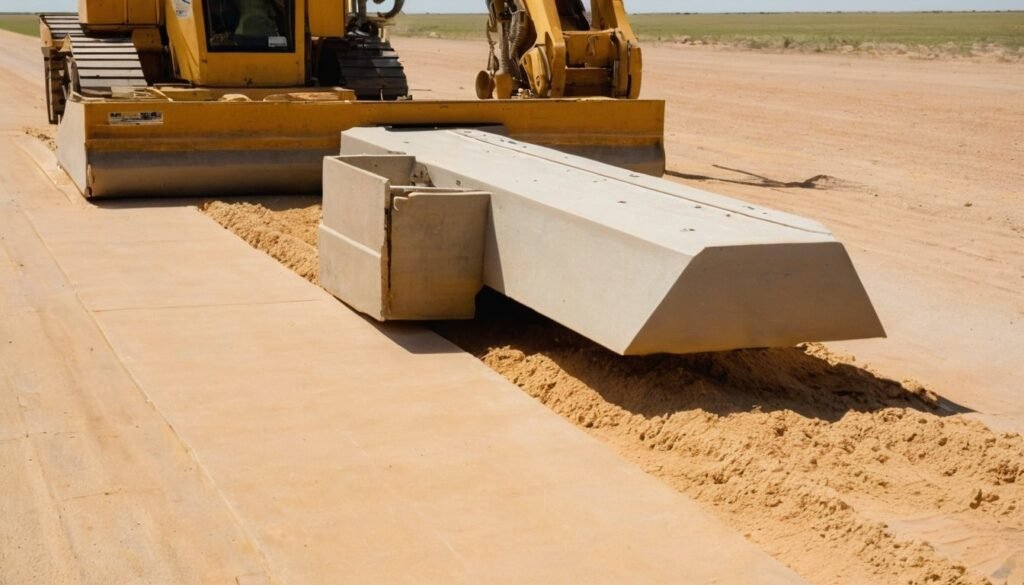
Long straight runs can be extruded by a curbing machine that lays the same shape the whole way. Curves, corners and short runs are hand formed. We prepare a compacted base, set a string line for height and slope and pour.
The gutter must fall toward the inlet at the right pitch. On flat land, a small error holds water, so we check slope with a level and a laser. We cut joints for cracks, finish the surface and cure it with care.
Drainage, rules and flat land
Water in Lubbock often ends up in playa lakes or storm systems. Sites near the street may need city approval for how water leaves. We help you understand what is needed, and we follow your site plan.
We call Texas811 before digging. See concrete parking lots and commercial concrete flatwork for related work.
Concrete curbs cost, timing and next steps
Price depends on length, shape, base work and whether we use a machine or hand forms. Many jobs finish in a day or two, with a few days of cure before heavy use.
Send a sketch or site plan through the contact page, or call us for a free written estimate.
Concrete Curbs and Gutters questions answered
What is the difference between a curb and a gutter?
A curb is the raised edge. It blocks cars and holds back soil and water. A gutter is the shallow channel next to the curb where water runs to a drain. Often they are poured as one piece, called curb and gutter, with a rise on one side and a sloped channel on the other.
Some projects only need a curb, like around a landscape bed or a parking row. Others, like a long lot, need the full curb and gutter so rain has a clean path. We look at how water moves on your property and tell you which shape fits. Getting the slope right is the most important part, because a gutter that holds water causes damage. We bring finish samples to the estimate and hold them in the real sunlight, since colors look different outside than on a screen. Dust and grit blow across the plains and into fresh concrete, so we keep the work area clean and protect the surface while it sets.
Can you match an existing curb?
Usually, yes. We measure the shape of your old curb, including height, width and style, and build forms to match. If it was machine extruded, we can often use a similar profile. For short repairs, hand forming gives a close match.
Color will differ at first because new concrete is lighter than old concrete, but it blends in over a season. We tie new concrete to old with dowels where it makes sense. If part of your curb is broken or sunken, we can saw out the bad section and replace just that piece. Water is the cause of most concrete problems, so we always look at slope, gutters and sprinklers before we pour anything. If you plan to add something later, like a cover, a hot tub or a grill island, tell us now so we can build for it. We can pour in sections when access is tight, or the area is large, so the finish stays uniform and the crew can do their best work.
How long do concrete curbs last?
A good concrete curb and gutter can last 30 years or more. The main enemies are poor drainage, a weak base and heavy trucks hitting the edge. If water collects behind or under the curb, the soil can wash out and the curb can tilt or crack.
We build a stable base, set the right slope and place joints at the right spacing. After the job, keep drains clear, repair small cracks early and avoid hitting the curb with heavy equipment. If a section is damaged, it can be cut out and replaced. A broom finish is the safest choice outdoors, and it hides dust, small marks and the wear of daily use. We would rather spend an extra hour on prep than have you call us in a year about a crack that was avoidable. Following your engineer's or builder's drawings is part of the job, and we raise questions early if something does not look right.
Do I need a permit for concrete curbs?
On private property, you may not need a permit for the concrete itself. If a curb connects to a public street, a state road or a drainage easement, you may need approval from the city, the county or TxDOT. New commercial lots often follow site plan and stormwater rules.
We suggest asking your local planning office early. If you are working with an engineer, we follow the drawings for height, slope and location. Before digging, we call Texas811. If you are not sure what applies, tell us about your property and we will point you to the right office. When the job is finished, we leave simple care instructions so you know how long to wait and how to keep the surface looking good. Your first rain after a pour is nothing to worry about once the surface has set, but we advise covering fresh concrete if rain is close. If an old slab has been undercut by water, we fill and compact the void before we pour so the new slab has even support.
Can a curb be added to an existing lot or driveway?
Yes. We can add a new curb along the edge of old asphalt or concrete. We saw cut and prepare the edge, drill dowels if needed, and set forms or run the machine against the pavement. The new curb protects the edge from breaking down and gives the lot a finished look.
A curb can also fix drainage. If water runs into a building or washes out a bed, a short curb can steer it. We walk the site, watch how the water moves and suggest where a curb will help most. New concrete is lighter than old concrete at first, but it darkens over a season or two and a sealer helps the two blend. Expansion joints at walls, steps and other slabs let each piece move on its own, which keeps the edges from cracking. A free estimate includes our honest recommendation, even when the answer is that a smaller or simpler job will do.
What finish do concrete curbs get?
The top and face of a curb usually get a light broom texture, which is clean, nonslip and hides small marks. Edges are rounded or tooled so they do not chip. On machine run curb, the shape comes from the machine, and we finish by hand at joints and corners.
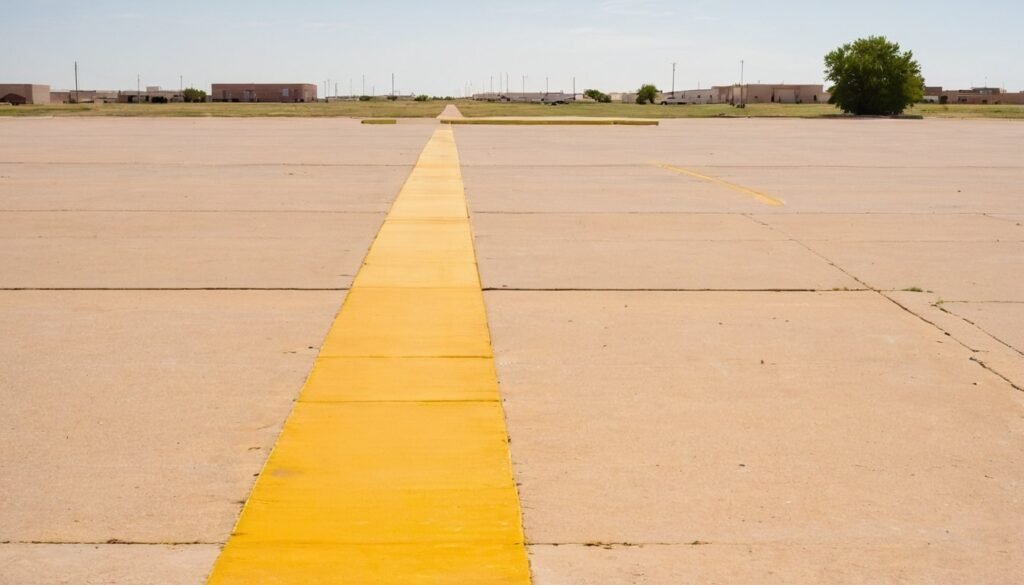
Color is possible, too. Some shopping centers like a tinted curb or a painted stripe to mark loading zones or fire lanes. A sealer protects the surface from oil and road grime. For standard lots, a natural gray broom finish is the best value. A little extra work on the edges of a slab, where moisture changes hit first, is some of the best money you can spend. A pressure washer can clean concrete, but keep it at a moderate setting and keep it moving, since too much pressure scars the surface. A second look at your plan after a night's sleep is often a good idea, and we are happy to adjust the estimate to match.
Ready for a free estimate? Call (806) 541-4636 or use the estimate form. Lubbock Concrete gives clear written estimates for patios, slabs and driveways across the South Plains.