
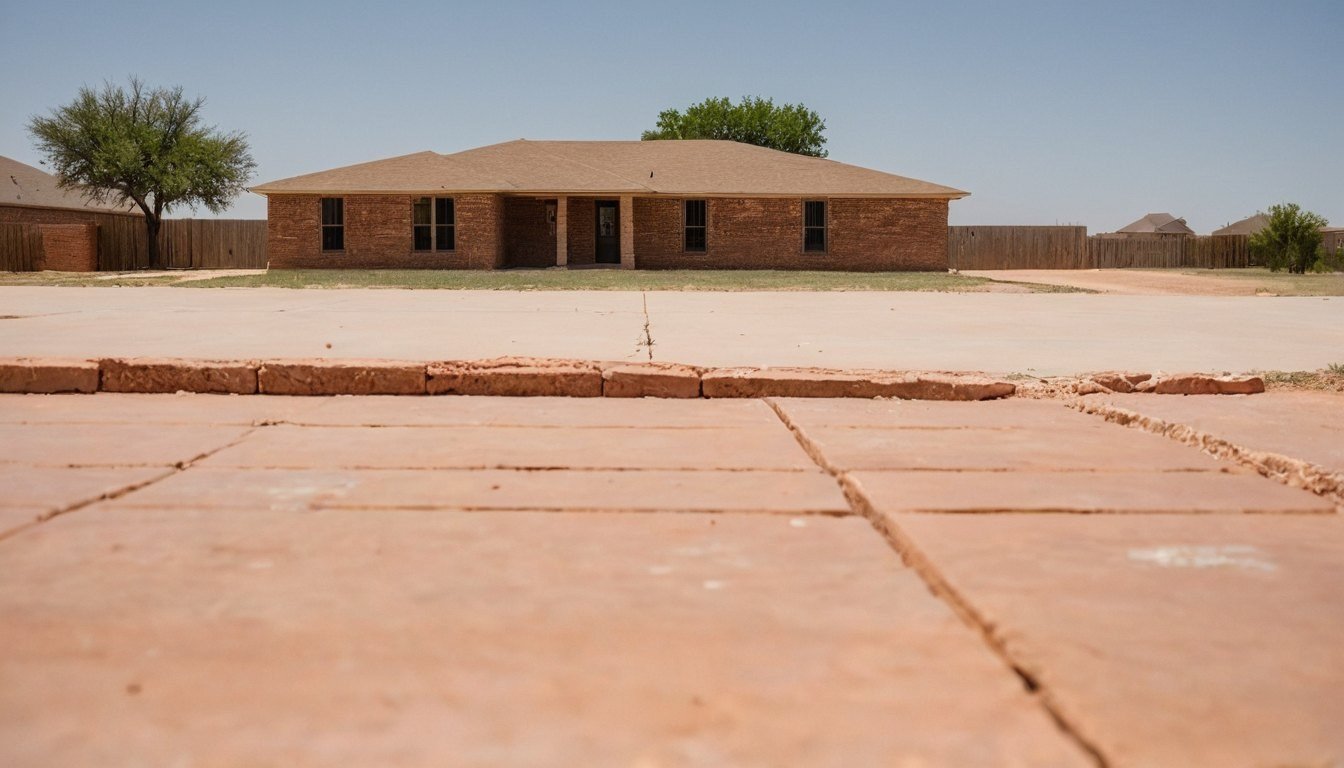
On Lubbock clay, slabs do not always stay where we put them. The soil under a driveway, a walk or a patio can wash out, shrink or settle, and one side of the slab drops. The result is a trip hazard, a puddle that stays after rain and a gap along the house. Concrete leveling is a way to lift that slab back to where it belongs, often for far less than a tear out.
Lubbock Concrete handles concrete leveling for sunken driveways, patios, sidewalks, steps and garage floors in Lubbock, TX and across the South Plains. We look at the slab and the soil first, tell you honestly what can be lifted, and give you a free written estimate.
What concrete leveling is and when it works
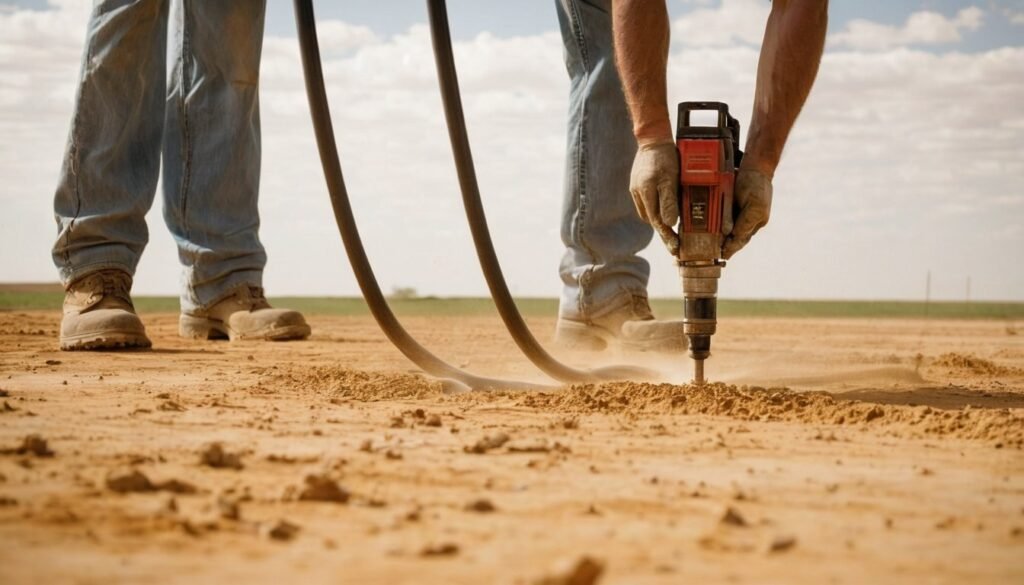
Concrete leveling, sometimes called slab lifting or mudjacking, fills the empty space under a sunken slab and lifts it back into place. Small holes are drilled in the slab, a lifting material is pumped under it, and the slab rises in small steps until it is level with its neighbors.
It works best when the slab itself is solid, in one piece and has simply settled. It does not work on a slab that is broken into many pieces, badly crumbled or sitting on soil that is still moving.
- A driveway or walk that has dropped on one side
- A patio that tilts toward the house
- Steps or stoops that have sunk away from the door
- A garage floor that has settled near the door
Why slabs sink on the South Plains
Water is the usual cause. Roof runoff, sprinklers and rain soak the soil next to a slab, and clay soil softens and moves. Sandy fill can wash out, leaving voids. Poor compaction when the slab was first poured makes it worse. Once a void forms, the slab sags into it.
Fixing the cause matters as much as lifting the slab. We look at gutters, downspouts, sprinklers and slopes, because a lifted slab will sink again if the water keeps coming.
Leveling versus replacing a slab
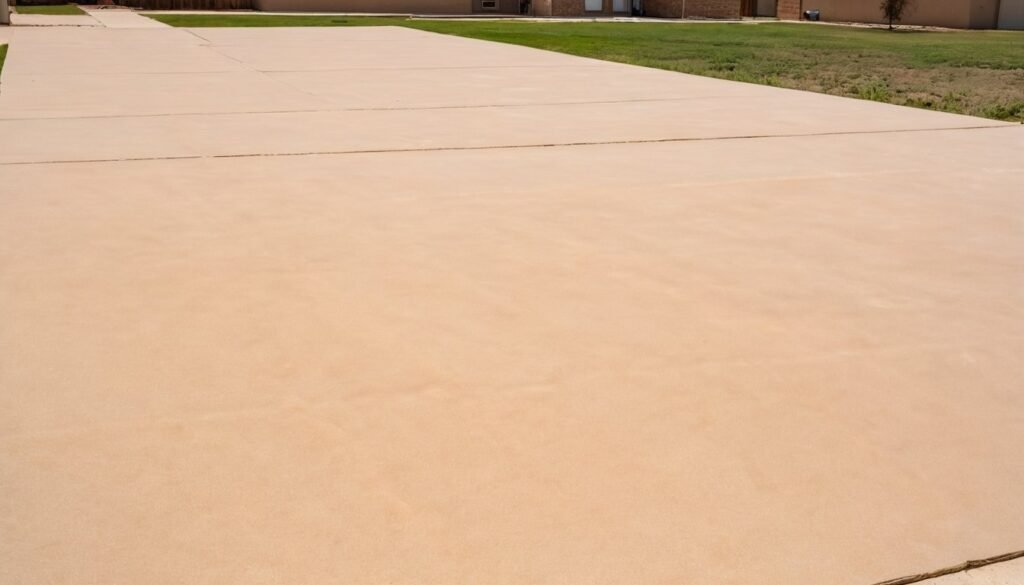
Leveling costs less than replacing and finishes faster, usually in a few hours. You keep your existing concrete, color and landscaping. Replacement is a better choice when the slab is cracked into pieces, when the surface is failing or when the soil needs major work.
We tell you which fits. Related pages include concrete repair, concrete driveway replacement and concrete removal.
Concrete leveling cost, timing and next steps
Price depends on the size of the slab, how far it has sunk and how much material is needed. Most jobs take a few hours, and you can usually use the surface soon after. We give you a free written estimate after we look at the slab and the drainage.
Call us or use the contact page. Send a photo of the sunken area if you like.
Concrete Leveling questions answered
What is concrete leveling and how does it work?
Concrete leveling lifts a sunken slab back to its original height by filling the void underneath it. We drill small holes in the slab, pump a lifting material under it and raise the slab slowly until it is level with the concrete around it. Then we fill the holes and clean up. The goal is to restore support under the slab, not just to push it up.
It works well on solid slabs that have settled in one piece. If the slab is badly broken or the soil is still moving, lifting will not last, and replacement is smarter. We look at the slab and tell you which path makes sense. Small differences in color from one pour to another are normal in concrete, and they soften with time and sunlight. If you rent your property, we can work with your landlord or manager to get the plan approved and the work scheduled.
How do I know if my slab can be leveled or must be replaced?
Look at the slab. If it is mostly in one piece, with a few cracks but a solid surface, and it has simply dropped on one side or near the house, concrete leveling is often possible. If it is crumbling, broken into many pieces or has a failing surface, replacement is the better choice. A hollow sound when tapped means a void underneath.
The soil matters too. If water keeps washing out the ground, any fix will fail until the water is controlled. We check the drainage and explain your options, and we give a free written estimate for each one. Ask us about matching the finish of nearby concrete, since the right texture and joint pattern help the new work look planned. Compacting the base in layers is slow work, but it is what keeps a slab flat when the ground around it shifts. The right mix matters, and we choose concrete strength and air content for outdoor work, not just the cheapest bag or truck.
How long does concrete leveling take, and when can I use the slab?
Most jobs take a few hours, depending on the size of the slab and how far it has dropped. The lifting happens in steps, and we check the level as we go. After the holes are filled, you can usually walk on the slab right away and use it for light traffic soon after.
Heavy vehicles may need a short wait, and we tell you exactly how long. Compared with tearing out and pouring a new slab, leveling is much faster and does not leave you with weeks of curing and a torn up yard. We keep our estimates simple, with the work, the materials and the price in plain words, so you know exactly what you are getting. Concrete reaches most of its strength in about a week and its full design strength in about four weeks. Stay off fresh concrete with wheelbarrows, tools and heavy carts for the first week, since edges are the easiest part to damage.
Will the slab sink again after leveling?
It can if the cause is not fixed. Most sinking is caused by water washing out or softening the soil under the slab. If roof water, sprinklers or poor grading keep sending water there, a void can form again. We look at gutters, downspouts, slopes and sprinkler heads and tell you what to change.
When the cause is handled, a leveled slab can stay in place for many years. We cannot promise any slab will never move, because clay soil is unpredictable, but good drainage gives you the best chance. Photos help a lot, so send a few pictures of the area, including any cracks, low spots or drainage trouble, when you contact us. We bring finish samples to the estimate and hold them in the real sunlight, since colors look different outside than on a screen. Dust and grit blow across the plains and into fresh concrete, so we keep the work area clean and protect the surface while it sets.
Can you level steps, sidewalks and patios, not just driveways?
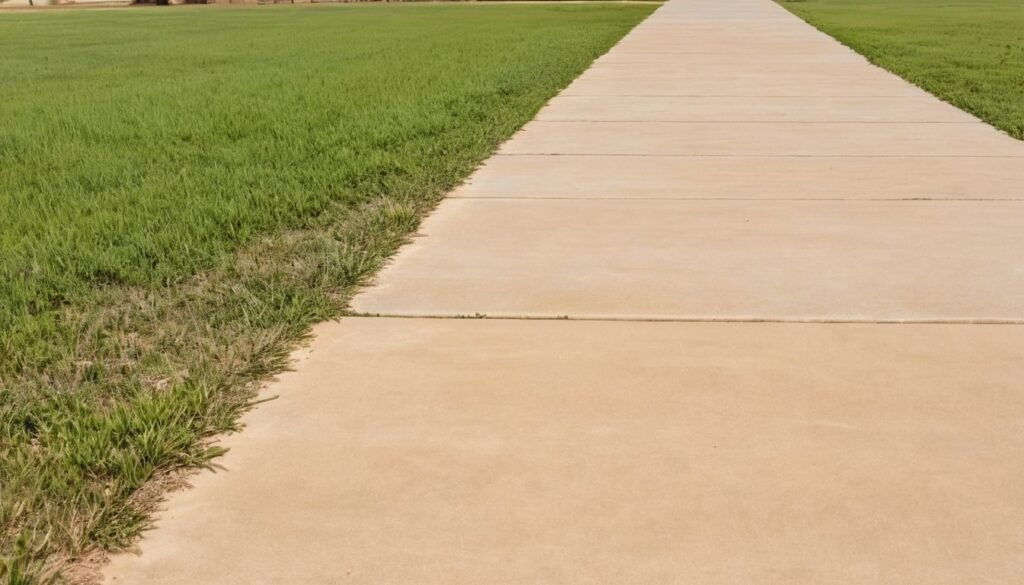
Yes. Many sunken slabs are sidewalks with raised edges, patios that tilt toward the house, steps that have dropped away from the door and garage floors that have settled. Each one is lifted in small steps until it is level and drains the right way. Trip hazards in sidewalks are one of the most common jobs.
Steps and stoops attached to the house need extra care so we do not damage the wall. We look at the slab, the connection and the soil before we start. See concrete sidewalks and concrete steps. Water is the cause of most concrete problems, so we always look at slope, gutters and sprinklers before we pour anything. If you plan to add something later, like a cover, a hot tub or a grill island, tell us now so we can build for it. We can pour in sections when access is tight, or the area is large, so the finish stays uniform and the crew can do their best work.
How much does concrete leveling cost compared with replacement?
Leveling usually costs much less than tearing out and replacing a slab, because there is no demolition, hauling or new pour. The price depends on the size of the slab, how deep the voids are and how much material is needed. Replacement costs more but gives a new slab with a better base.
We give a free written estimate for leveling and, when it makes sense, for replacement, so you can compare. If leveling is not a good fit for your slab, we tell you why, and we do not sell work that will not last. A broom finish is the safest choice outdoors, and it hides dust, small marks and the wear of daily use. We would rather spend an extra hour on prep than have you call us in a year about a crack that was avoidable. Following your engineer's or builder's drawings is part of the job, and we raise questions early if something does not look right.
Ready for a free estimate? Call (806) 541-4636 or use the estimate form. Lubbock Concrete gives clear written estimates for patios, slabs and driveways across the South Plains.