
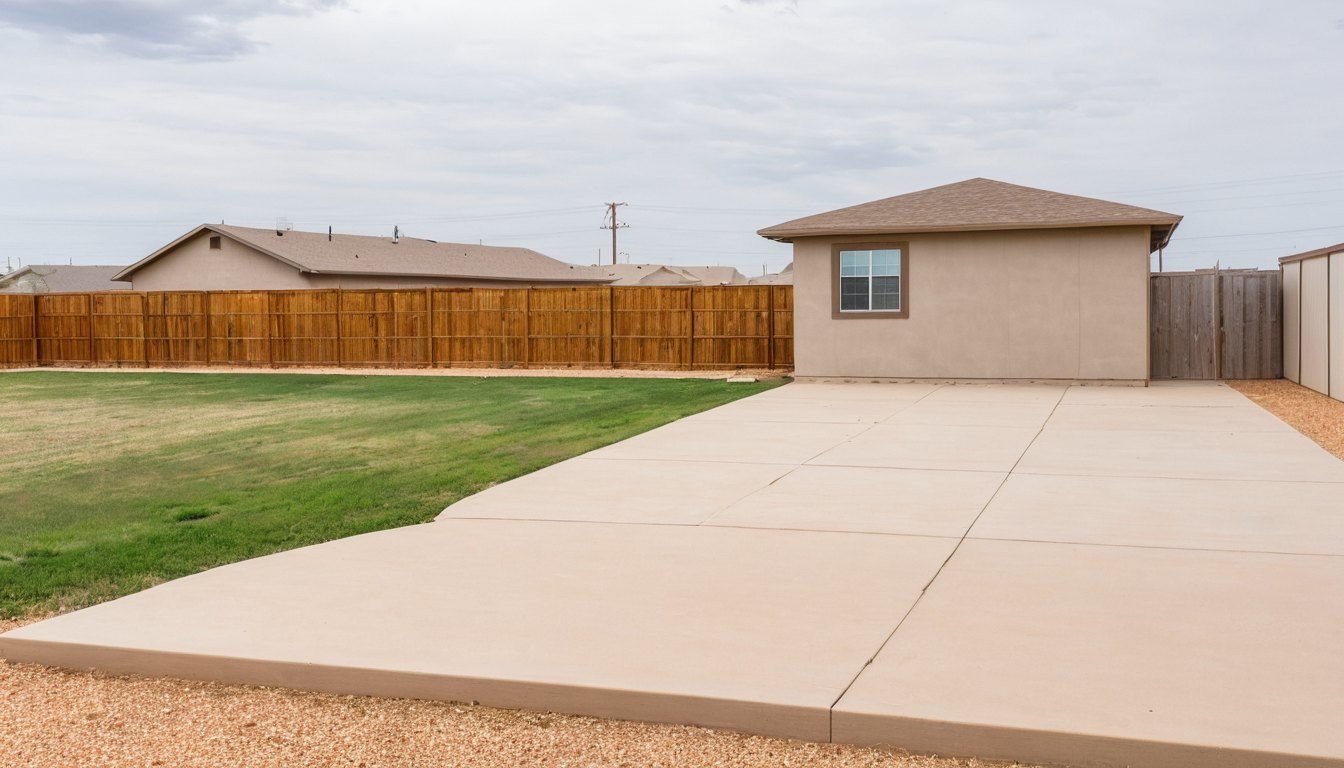
Smyer is a small Hockley County town between Lubbock and Levelland, quiet and close to farmland. Many homes have wide lots, shops and trailers, and the wind blows steady across the flat land. A concrete contractor in Smyer TX needs to do small jobs well and big jobs right.
Lubbock Concrete comes out to pour patios, slabs and driveways in Smyer. We give a free written estimate and plan every pour for wind and heavy use.
Concrete for small town and country lots
A concrete contractor in Smyer TX should treat a small patio and a large pad with the same care. We ask how you use the space, check the ground and plan the slab.
Many Smyer lots have shops and trailers, so we think about weight and turning.
- Patios and walks
- Driveways and aprons
- Shop slabs and pads
- Written estimates
Projects around Smyer
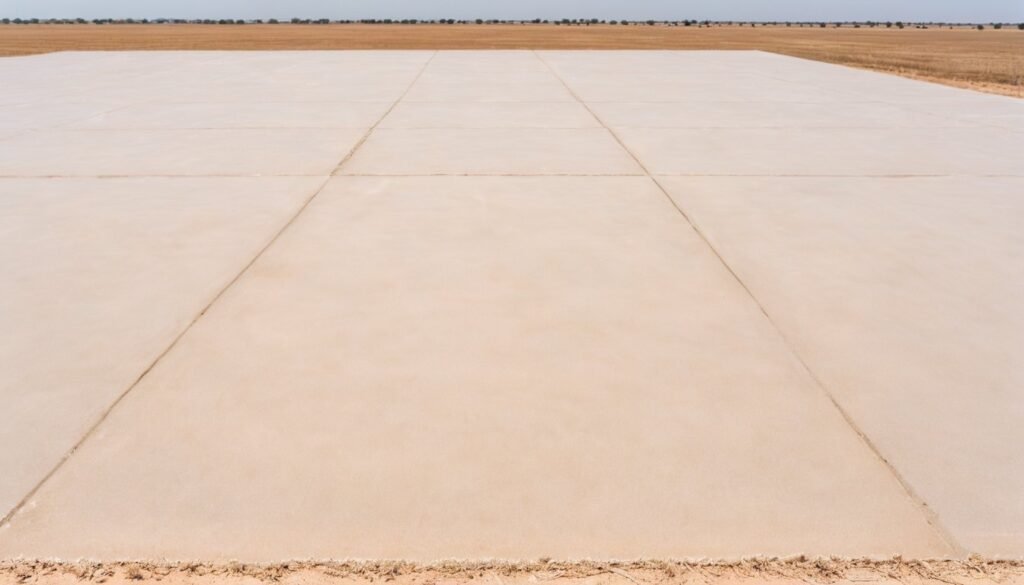
We pour patios, driveways, slabs and steps, plus RV pads and shop floors.
Ground and wind near Smyer
Soil is sandy loam with caliche, and the land is flat and windy. We compact bases, slope for drainage and cure carefully. A concrete contractor in Smyer TX also checks irrigation lines before digging.
Serving Smyer and the roads around it
We serve Smyer and the farm roads toward Levelland, Ropesville and Lubbock.
Use the contact page or call us for a free written estimate.
When you need a concrete contractor in Smyer TX, we start with a visit, a tape measure and a plain explanation. We work across Hockley County and the South Plains, and our crew handles concrete patios, concrete driveways and concrete slabs with the same care on every job.
Questions about hiring a concrete contractor in Smyer TX
What is a fair price for a concrete patio in Smyer?
It depends on size, finish and site work. A plain broom finish costs the least. We measure at the free estimate and write the price down.
Price also depends on how far we haul and how easy the yard is to reach. We explain each part of the estimate, and we are glad to show you a smaller or simpler option if the budget is tight. Sandy and clay soils behave differently, and we check what is under your yard before we decide on thickness and base. The sound of a crew finishing at the end of a long day on a flat, smooth slab is a good one, and it is what we aim for on every job. If a permit or approval is needed, we help you understand the steps so the job is not held up later. Pouring concrete near trees takes care, and we keep slabs away from big roots where we can and thicken them where we cannot.
Can you pour near irrigation lines?
Yes, with care. We ask where lines run, mark them and avoid cutting or crushing them. Tell us before we dig.
If an irrigation line or a sprinkler pipe is close to the slab, we mark it, protect it and keep a safe distance. We also ask about wells, septic lines and buried power or gas. If you notice puddles that stay for days after rain, tell us, because that spot needs a better slope before anything is built over it. Curing means keeping the surface damp or covered after finishing, and it matters as much for strength as the mix itself. Every job gets a final walk through, where we check the finish, the edges and the slope with you before we leave. Walking the site together is the best way to find problems early, and we are glad to do it at no charge as part of your free estimate.
How do you keep slabs from cracking?
With a compacted base, steel, control joints and careful curing. Wind and heat are the biggest threats, so we plan for them.
Besides steel and joints, we reduce cracking by keeping water off the edges of the slab, by shading it from the sun after finishing and by avoiding pours on very windy days. A lighter color stays cooler under bare feet in July, which is worth thinking about for patios, pool decks and walks. Leaving a small gap or sleeve for future pipes, wires or posts now is much easier than cutting concrete later. Clay soil moves as it gets wet and dry, which is why a compacted base and steel inside the slab are never optional on our jobs. Keep gutters clean and downspouts extended, because roof water pouring next to a slab can wash out the base. A level slab is easy to see, and a slab with a proper slope is just as important, because water needs somewhere to go.
Do you pour driveways with a culvert?
Yes. We set the right pipe, cover it and thicken the concrete over it so the drive holds up to trucks.
A culvert should be sized for the water that really passes through it. We use the right pipe, cover it with enough fill and thicken the concrete over the top so the drive does not crush it. Cold snaps can arrive quickly in winter, and fresh concrete must never freeze, so we watch the overnight lows before every pour. A walk through your yard after a heavy rain shows where water really goes, and it helps us design the slope correctly. The more we know about your plans, the better we can design the slab, so share your ideas even if they are not final. Keep roof water and sprinkler spray away from the edges of your slab, since wet soil next to concrete is a common cause of movement. If the forecast turns bad the night before, we call and reschedule, because a short delay is better than a damaged slab.
When can I park on a new driveway?
After about a week for cars, and about four weeks for heavy trucks. We tell you the exact dates.
Plan a week for cars and four weeks for heavy trucks, and we will tell you exactly when we finish. Cold or windy days may slow the cure a little. Texas heat can push concrete to set faster than expected, so we bring extra hands and plan the finishing order before the truck arrives. If you have an HOA, get approval in writing before the pour, and we will help with a simple sketch and finish samples. We keep the same crew on your job from start to finish whenever we can, so the people who plan it also build it. Please call with any question, large or small, because we would rather answer it now than have you wonder. Tell us what will sit on the slab or drive across it, since the weight on each wheel decides how thick the concrete should be.
How do I get a free estimate in Smyer?
Call us or use the contact form with your address and project. We visit, measure and give a written price.
We schedule estimates in blocks by area, so we can usually stop by within a few days of your call. Rinse oil, grease and fuel spills off concrete as soon as you can, because they soak in and stain over time. Fresh concrete is alkaline and can irritate skin, so keep kids and pets away and wash off any wet concrete right away. Do not use de icing salt on new concrete, because it can scale the surface, and a little sand gives traction without harm. The first week after the pour is the most important time for the concrete, so a little patience then pays off for decades. We follow the plans for steel size and spacing, and we use chairs to hold rebar off the dirt so it ends up in the middle of the slab.
Looking for a concrete contractor in Smyer TX? Call (806) 541-4636 or use the estimate form. Lubbock Concrete gives clear written estimates for patios, slabs and driveways across the South Plains.