
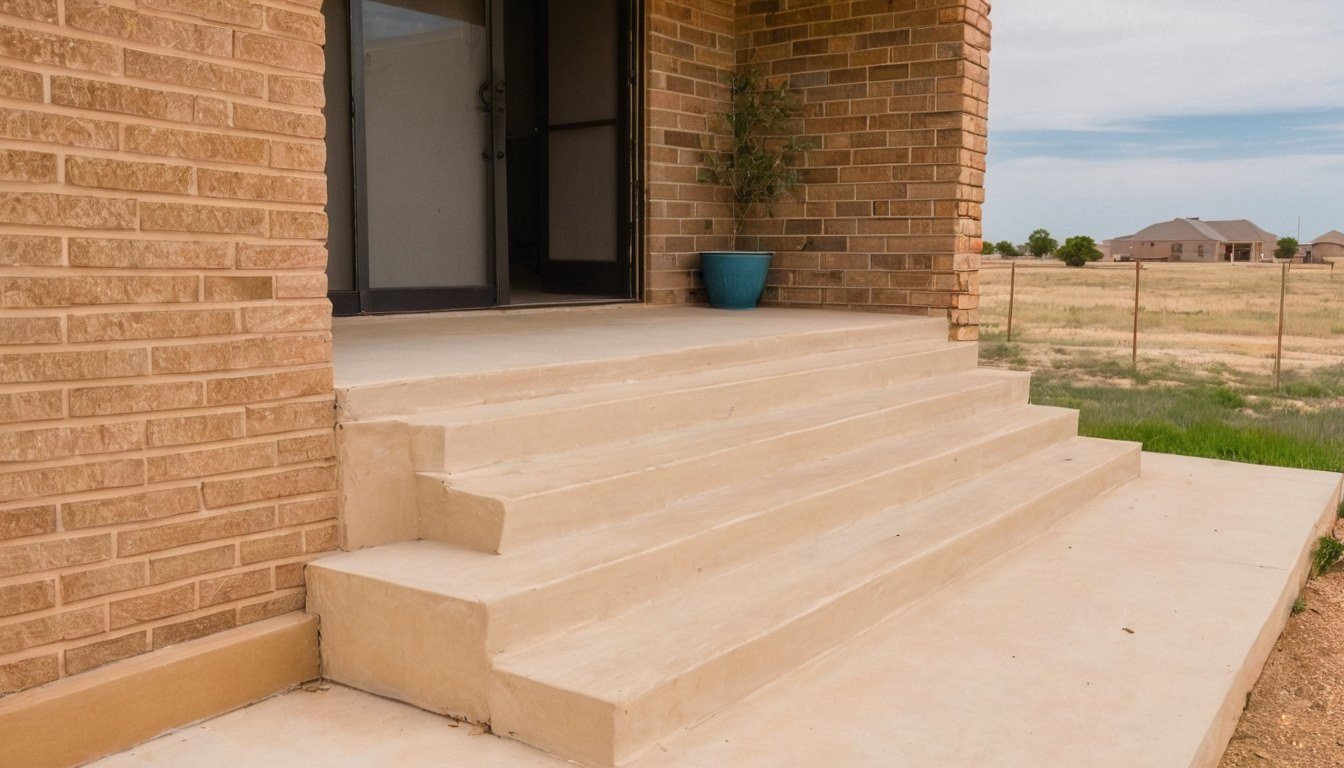
Steps get used every day, and a bad step is how people get hurt. Uneven risers, crumbling edges and slick surfaces cause falls. Concrete steps that are built right feel solid, shed water and last for decades, even in Lubbock, TX where wind, sun and freezing nights are all part of the year.
Lubbock Concrete builds and replaces concrete steps for front doors, back doors, patios and decks. We give you a free written estimate and build to even heights, safe depths and a finish that grips.
What makes concrete steps safe
Every step should be the same height. The rise is usually about seven inches, and the tread, the part you step on, is at least ten or eleven inches deep. A landing at the door should be big enough to open the door and stand without stepping back. We measure from the door threshold to the ground, then plan the number of steps to fit.
A handrail is a good idea, and many places require one for steps with more than a few risers. We can set rails in the concrete or leave sleeves so a rail installer can add them later.
- Even rise and tread on every step
- A landing deep enough for the door swing
- Broom finish for grip when wet
- Rail sleeves set in the concrete when needed
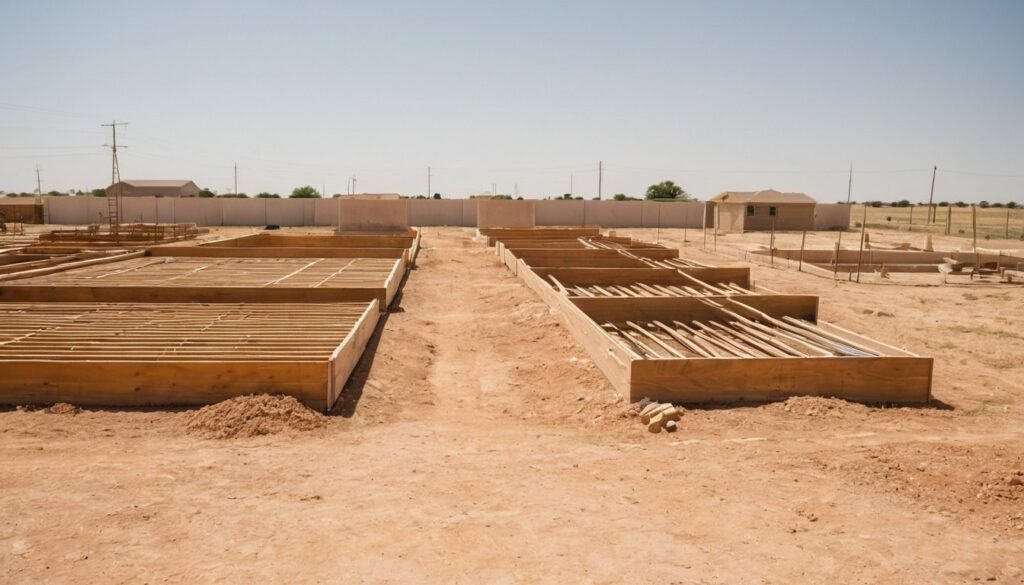
Building concrete steps on Lubbock clay
Steps can pull away from a house if the soil under them moves. We dig down to firm soil, compact a base and set steel inside the steps. Where the plans allow, we tie the steps to the foundation with dowels, and we use a flexible joint at the wall so small movement does not crack either one.
We slope the landing slightly away from the door so water does not stand there. In winter, concrete steps see freeze and thaw, so we use air entrained concrete. We seal the steps after they cure to protect against stains and weather.
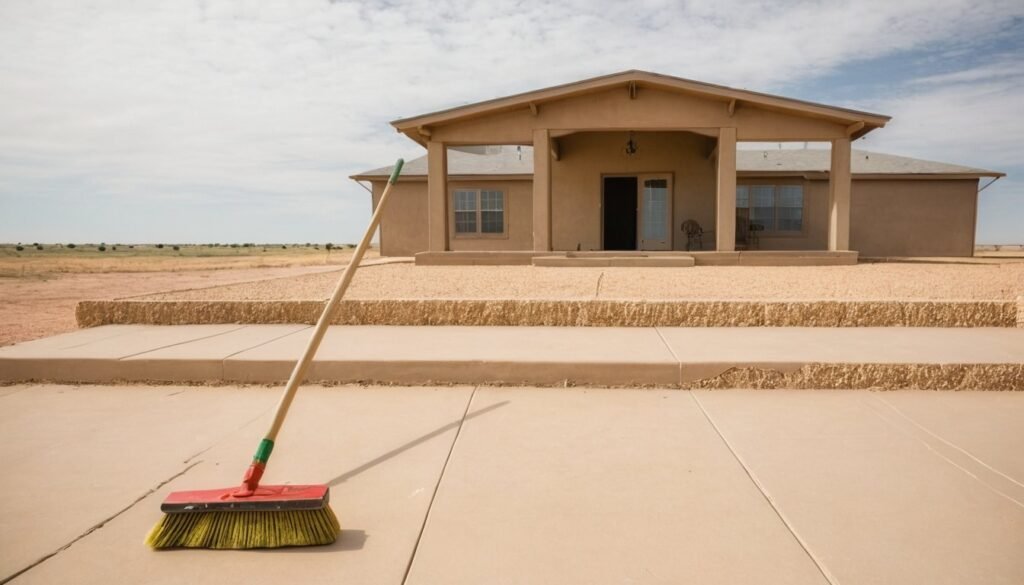
Replacing old or damaged concrete steps
Signs that steps need to be replaced include gaps between the steps and the house, wobble, deep cracks, crumbling edges and a tilt. We remove the old steps, fix the soil and pour new ones. If the steps are in good shape but worn, a repair or an overlay may be enough.
We can match brick, stucco or siding colors with a tinted mix. For a custom look, ask about decorative concrete. Related work includes porches and sidewalks.
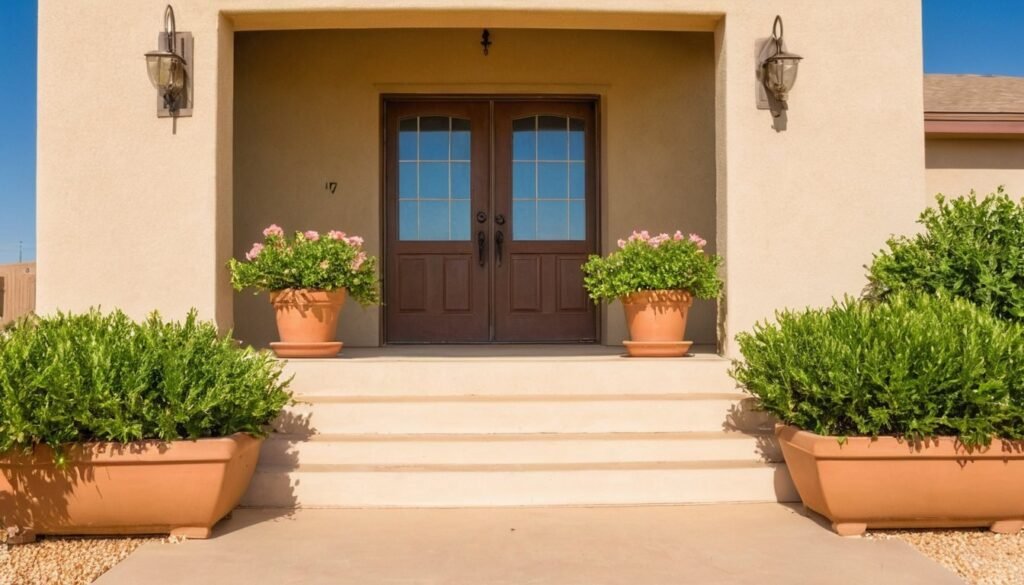
Cost, timing and next steps for your concrete steps
Most steps take one to two days to build. You can walk on them after a day or two, and carry heavy loads after a week. Price depends on the number of steps, the size of the landing, removal, finish and rails.
Call us or use the contact page for a free written estimate. We will measure, talk through options and give you a plain price.
Concrete Steps questions answered
How tall should each concrete step be?
The common height for each step, called the riser, is about seven inches, and the depth of each step, called the tread, is ten to eleven inches or more. Each step in a set should be the same height, within about three eighths of an inch, because people trip when one step is different. The top landing should be flat and level with the door threshold or slightly below it.
We measure from the doorway to the ground and divide the height evenly, so every step matches. Local code and the type of building can change the numbers, so we check the rules that apply. If you have someone who uses a walker or has trouble with stairs, tell us, and we can adjust the design or plan a ramp. Fresh concrete is alkaline and can irritate skin, so keep kids and pets away and wash off any wet concrete right away.
Do I need a handrail on concrete steps?
Many codes require a handrail on steps with more than three or four risers, and it is a smart safety feature even where it is not required. A rail gives people something to hold on a wet or windy day, and it helps older family members and small children. We can set metal rails into the concrete, or leave sleeves so a rail company can install later.
Plan the rail before the pour. Drilling holes afterward can chip the concrete. If you have an HOA, check their style rules for rails. A well placed rail turns plain concrete steps into a safe, finished entry. Do not use de icing salt on new concrete, because it can scale the surface, and a little sand gives traction without harm. The first week after the pour is the most important time for the concrete, so a little patience then pays off for decades. We follow the plans for steel size and spacing, and we use chairs to hold rebar off the dirt so it ends up in the middle of the slab.
Why are my concrete steps pulling away from the house?
Steps pull away when the soil under them settles or moves, when they were poured on loose fill, or when roof water pours onto them and washes out the base. Lubbock clay also swells and shrinks, and that movement can push or pull a step away from the wall. A small gap lets water in, and that makes the problem grow.
Sometimes a gap can be sealed with a flexible filler. If the steps have sunk or tilted, the better fix is to remove and rebuild them on a compacted base with steel and a flexible joint at the wall. We look at the steps, the gutters and the grade, and we tell you what will last. Our estimates are written, with the scope and the price spelled out, so you can keep them and compare them fairly. We can add a fine grit to a sealer where grip matters, so a protected surface stays safe even when it is wet.
What finish is best for outdoor concrete steps?
A broom finish is the best choice. The fine ridges give shoes grip, even when the steps are wet or dusty. A smooth trowel finish looks neat but can be slick, so we avoid it outside. We also round the edges slightly so they do not chip, and we can add a nonslip strip at the edge if safety is a big concern.
Color is a nice touch. A tan or light brown tint can match brick or stucco, and a sealer protects the surface. In Lubbock, strong sun can fade color slowly, so we recommend resealing every few years. Bring a photo of your house to the estimate, and we will help you choose. Using the right sealer for the job matters, and we choose between penetrating and film types based on grip, sun and use. Evaporation retarder is a spray that slows drying on windy days, and it is one of the simplest ways to prevent fine surface cracks.
How long do concrete steps last?
Well built concrete steps can last 30 years or more. The base, the steel and the drainage decide how long. Steps that sit on solid, compacted ground, with water directed away, last longest. Tree roots, leaking gutters and constant moisture shorten their life.
You can help by keeping the steps clean, sealing them every few years and filling small cracks early. Avoid de icing salt in winter, which can scale the surface. If a step starts to crumble or shift, call us sooner rather than later. A small repair is much cheaper than a rebuild. Plain language matters to us, so if anything in an estimate is unclear, ask, and we will explain it until it makes sense. A short phone call before you decide can save you money, so feel free to ask us any question about your project, big or small. Ask about a smooth border with a broom finish center if you like a custom look but want to keep the price in line.
Can you build steps to match my existing porch or walk?
Yes. We match the width, finish and color as closely as we can, and we line up new steps with the porch and walk so the edges meet cleanly. New concrete is lighter than old concrete at first, but it blends in after a season or two, and a sealer helps.
If the porch or walk is old and cracked, we will tell you whether it is better to repair it or replace it at the same time, so everything lasts the same length of time. We can also build a new landing and steps as one piece for a clean look. Ask for a free estimate and we will show you the options. Concrete is very durable, but it is not magic, and a little yearly care keeps it looking good and working well. On the South Plains, wind is the hidden enemy of fresh concrete, so we plan pours around the forecast and move the date when conditions are poor.
Ready for a free estimate? Call (806) 541-4636 or use the estimate form. Lubbock Concrete gives clear written estimates for patios, slabs and driveways across the South Plains.