
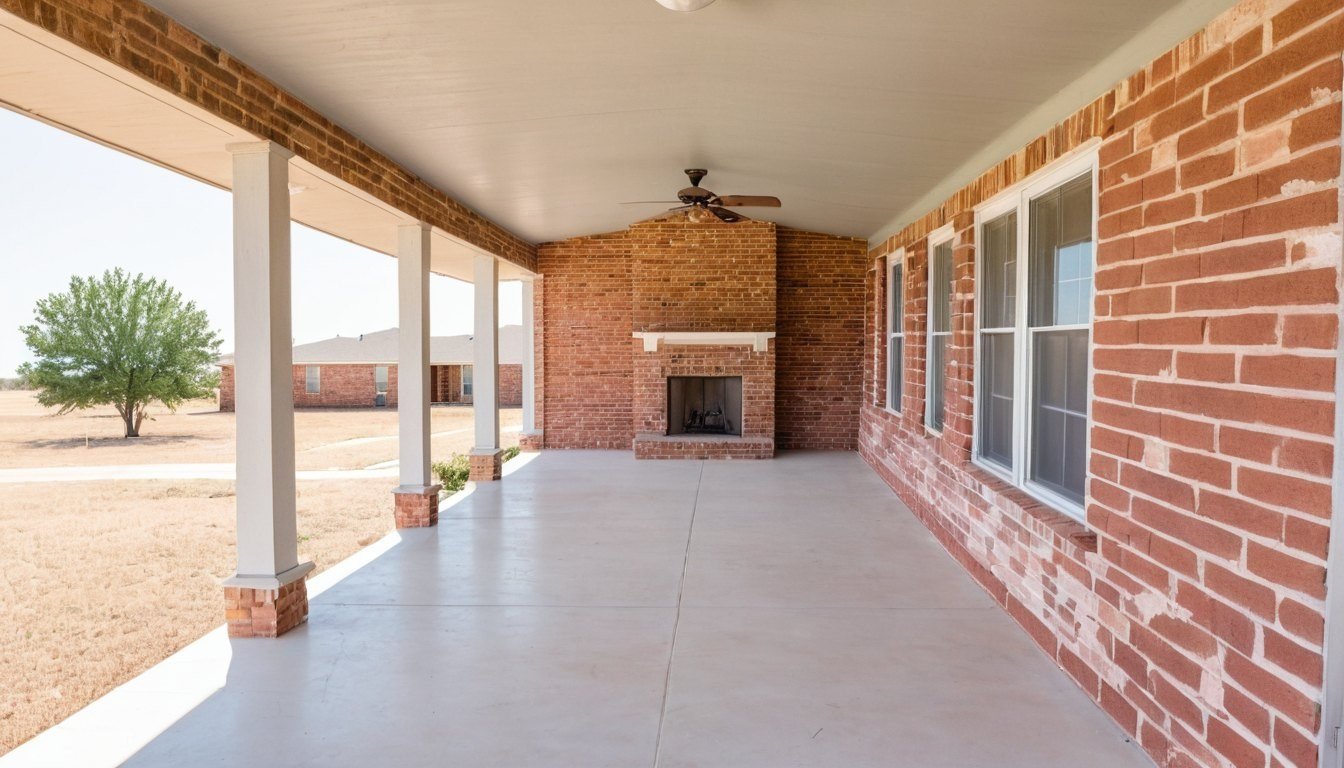
A porch is where you wave at neighbors, set down groceries and watch a West Texas storm roll in. It should be flat, strong and safe. Concrete porches in Lubbock, TX face sun, wind, blowing dust and freezing nights, so they need to be built with more than a quick pour.
Lubbock Concrete builds new concrete porches and replaces cracked, tilting and pulling away porches for homes across Lubbock and the South Plains. We handle the base, steel, forms, pour and finish, and give a free written estimate.
What good concrete porches have in common
A solid porch sits on compacted soil with steel inside and a slight slope away from the house. It is thick enough for the load, usually four to six inches, and thicker at the edges. A flexible joint at the wall lets the porch and the house move a little on their own.
A porch should be big enough to use. Five or six feet deep feels roomy for a chair or two. Covered porches also need footings for posts, and we place anchor bolts or post bases while the concrete is wet.
- Compacted base and steel inside
- Slope away from the door and walls
- Joint at the house wall
- Footings and anchors for covered porches
Finishes and details for concrete porches
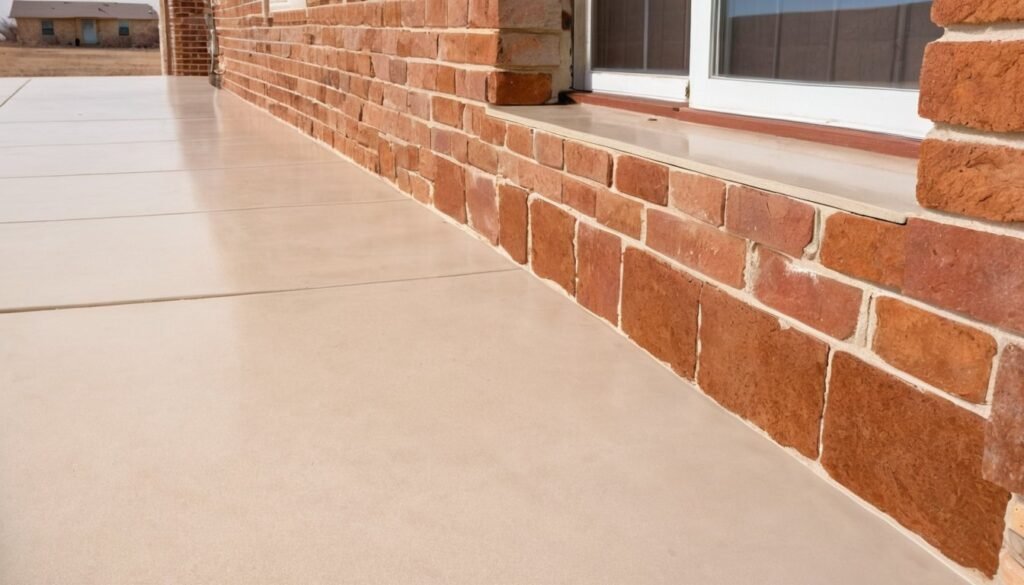
Broom finish is the standard because it grips when wet. Color and stain can match brick or stucco. A smooth border or a saw cut grid adds style. Edges can be rounded or squared, and steps can be built in with even risers. See concrete steps and decorative concrete.
A porch should sit slightly below the door threshold so water does not run inside. We check heights before we pour so doors still swing.
Replacing old concrete porches on clay soil
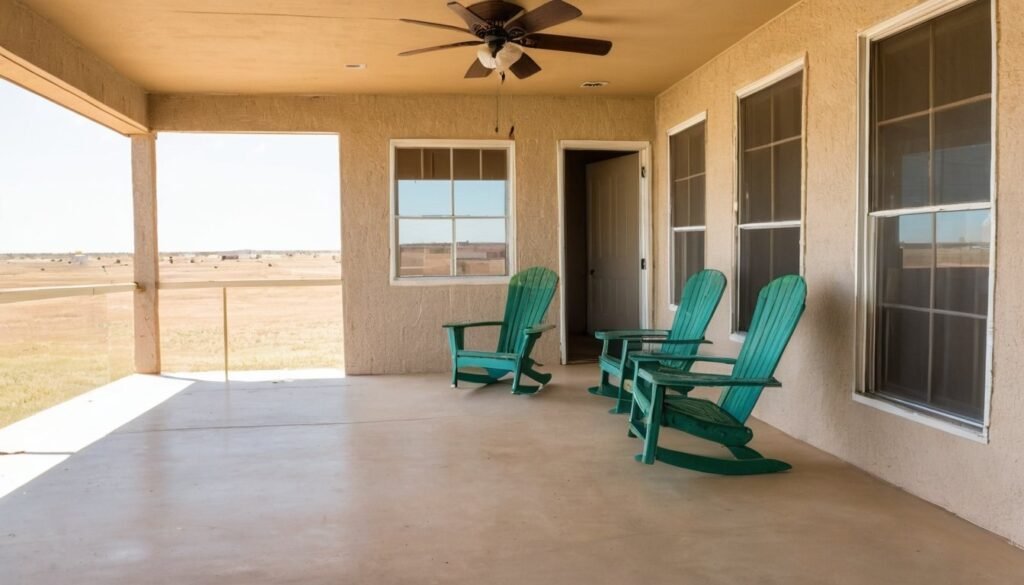
Concrete porches pull away from houses when the soil under them settles, when the base was loose fill or when roof water washes the soil out. Lubbock clay adds swelling and shrinking. We remove the old porch, fix the soil, compact a base and pour a new slab with steel and a joint at the wall.
We also check gutters and grade, since roof water is a common cause. For related work, see concrete removal and concrete sidewalks.
Concrete porches cost, timing and next steps
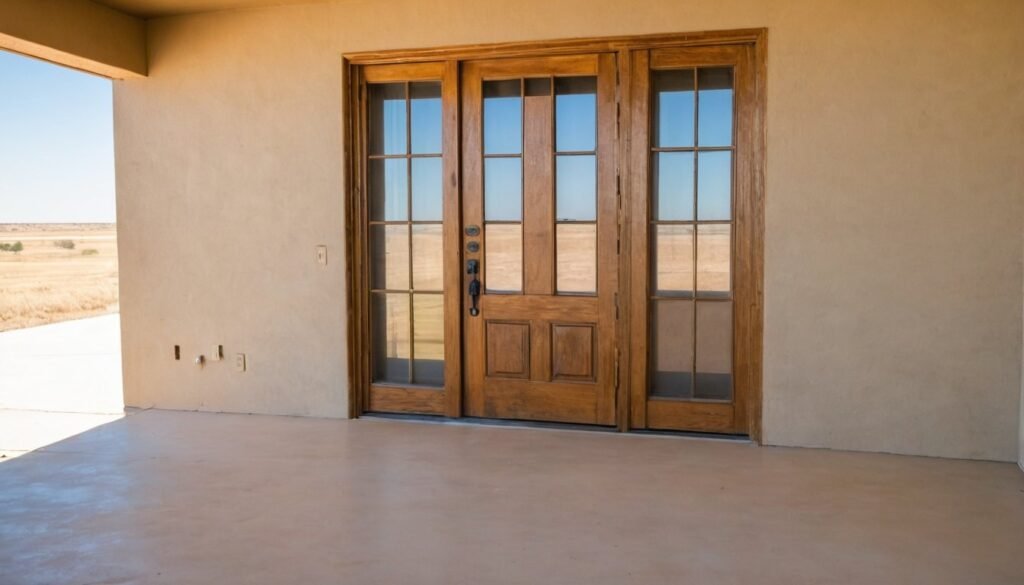
Price depends on size, covered or open, finish, removal and steps. Most porches take one to three days to build. Walk on a new porch after a day or two, and set furniture after about a week.
Call us or use the contact page for a free written estimate.
Concrete Porches questions answered
How thick should concrete porches be?
Four inches is the minimum for a normal porch, and five or six inches is better for a large or covered porch. Edges and areas under posts get extra thickness. Thickness works together with the base and the steel, and the base matters as much as the concrete.
On Lubbock clay, we compact a stable base and add rebar. We also leave a flexible joint where the porch meets the house, so the two can move separately without cracking. If your porch will hold heavy planters, a swing or a grill, tell us, and we will design for it. A well built slab makes everything on top of it easier, from furniture to equipment to the next project you add later. Hot weather speeds up the cure and cool weather slows it down, so we adjust the plan to the day instead of using one schedule for every job. Surface texture is a safety feature, so we choose finishes with real grip for steps, ramps and pool areas.
Why are concrete porches pulling away from the house?
Usually because the soil under the porch settled or moved, the porch was poured on loose fill, or roof water washed the soil away. Clay soil swells and shrinks with moisture, and that can push and pull a porch away from the wall. A small gap lets water in, which makes the problem grow.
A small gap can sometimes be sealed with a flexible filler. If the porch has sunk or tilted, the better fix is to remove and rebuild it on a compacted base with steel and a joint at the wall. We look at the porch, the gutters and the grade, and we tell you what will last. Gravel next to a slab can wash onto it in heavy rain, so a clean edge and a little slope keep both in their place. We stand behind our work and are happy to answer questions after the job is done, not just before it starts.
Can you pour covered concrete porches with posts?
Yes. Covered porches need footings under the posts, and the slab and footings are poured to the plans. We set anchor bolts or post bases while the concrete is wet, so the posts bolt down tight. We coordinate with your builder or roofer on the timing.
Bring plans or a sketch to the estimate. The size of the roof and the wind loads decide the footing size. Our South Plains wind is strong, so good footings are not optional. See concrete footings. Tell us if neighbors share a fence line or a drive with you, so we can plan the work to respect the property lines. On long driveways and big pads, we pour in sections with planned joints, so the slab stays flat and easy to repair if needed. Mark off the fresh surface with cones or tape and keep pets and children away until we say it is ready. A clean, flat edge where new concrete meets old comes from careful saw cutting and a little extra time at the forms.
What finish is best for concrete porches?
A broom finish is best. It grips when the porch is wet or dusty, and it hides small marks. A smooth finish is slick. If you want more style, a stained or colored porch in tan or terracotta fits many homes here, and a saw cut grid makes a large porch look finished.
Sealing protects the porch from water, oil and sun. We bring samples to your estimate and hold them against your house. In the afternoon sun, colors look different, so we always look outside. Hot, dry wind can crust the top of fresh concrete while the inside is still soft, which is why finishing at the right moment matters so much. Caliche, the hard layer under much of our soil, can slow digging, and we plan extra time when we know it is there. If we find a surprise under the old slab, like a void or soft fill, we explain it and fix it before we build on top.
How long before I can use new concrete porches?
You can usually walk on it after a day or two. Wait about a week before you put furniture, planters or a swing on it, and about four weeks before heavy loads. If we seal the porch, we need another day or two before normal use.
We tell you the exact dates when we finish. Wind and heat change the cure, so we may adjust the plan. We set out cones or tape so no one steps on it too soon. If you are comparing bids, ask each contractor to list the base work, the steel and the curing plan in writing, because that is where prices really differ. Air entrained concrete has tiny bubbles that give freezing water room to expand, which protects outdoor slabs in our winters. The best time to call is before you are in a hurry, because rushed concrete work is where most regrets begin. Think about how you will use the space in five years, not just this year, because a slightly larger or thicker slab now costs far less than redoing it later.
Can you match my existing concrete porches or walks?
We can come close. We match the width, finish and joint pattern, and line up the new work with the old so there is no trip edge. New concrete is lighter than old concrete at first, but it blends in after a season or two, and a sealer helps.
If the old porch is cracked or sunken, we will tell you whether it is better to repair it or replace it at the same time, so everything lasts the same length of time. We give a free estimate for each option. If you are not sure whether to repair or replace, we will look at it honestly and tell you what will last. Ask us for a rough range if you are early in planning, and we will tell you what affects the price most. We would rather tell you the truth about what a job needs than sell you something that will fail in a few years.
Ready for a free estimate? Call (806) 541-4636 or use the estimate form. Lubbock Concrete gives clear written estimates for patios, slabs and driveways across the South Plains.