
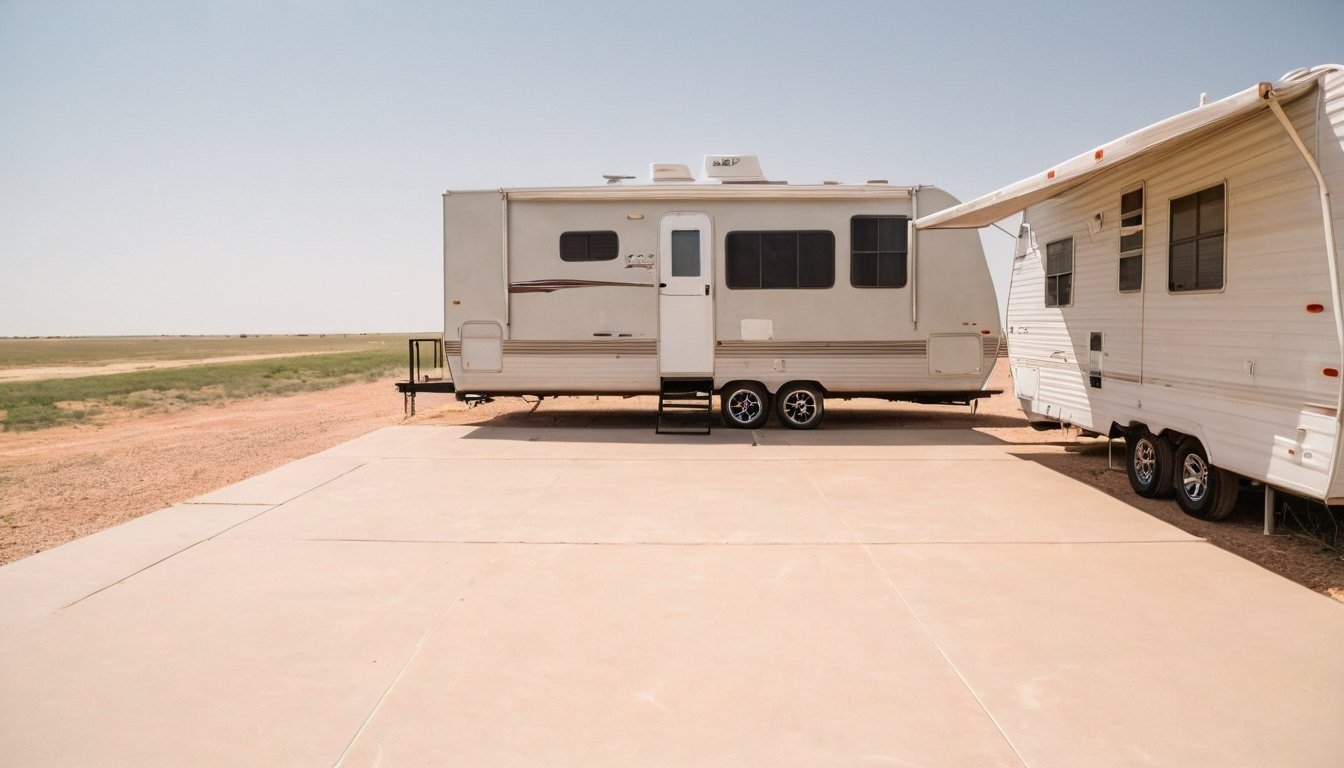
People on the South Plains love to travel. Lake Alan Henry, New Mexico, Colorado and the Gulf are all within a long day's drive, and RVs, campers and boats fill side yards and driveways. Parking them on grass or gravel leaves ruts, mud and weeds. Good RV pad concrete keeps tires up, keeps the rig clean and gives you a place to wash and work.
Lubbock Concrete builds RV pad concrete for homes and rural lots in Lubbock, TX and across the South Plains. We size the slab for your rig, plan drainage and give a free written estimate.
What makes good RV pad concrete
Motorhomes and fifth wheels are heavy, often over ten tons, and the weight rides on small tire patches. A thin driveway slab will crack. Good RV pad concrete is five to six inches thick with steel inside, on a compacted base.
Size matters, too. Add three or four feet around the rig for walking, hookups and storage. A gentle slope sheds rain, and a smooth entry keeps tires from chewing the edge.
- Five to six inch reinforced slab
- Compacted base for even support
- Extra room around the rig
- Slope for drainage and a strong entry
Planning RV pad concrete on your lot
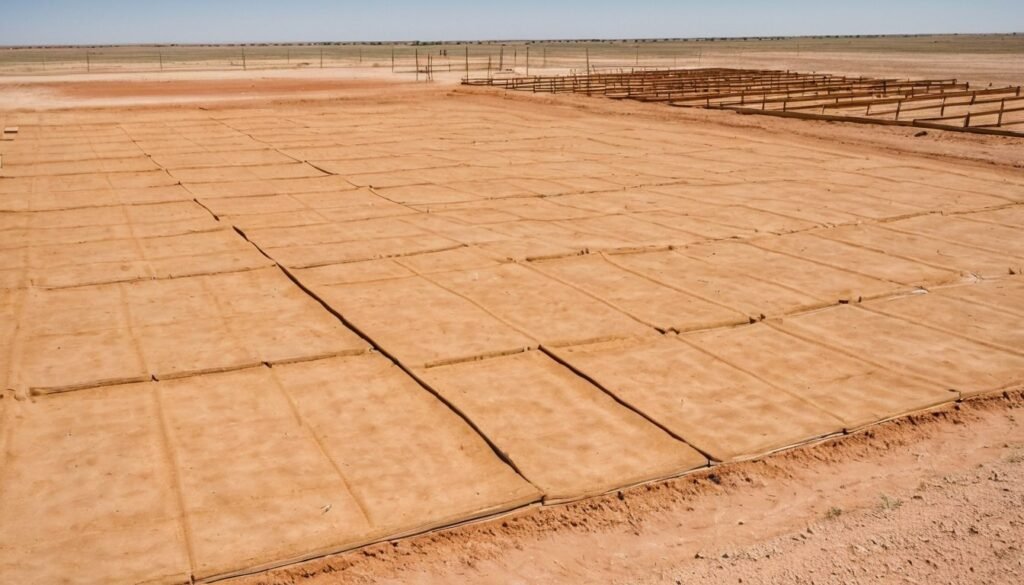
Plan RV pad concrete around how you turn in and out. Long rigs need a wide, smooth approach, and we may add a flared apron. Check setbacks and HOA rules before you plan. Hookups for power, water and sewer can be planned with sleeves in the slab.
Open land on the South Plains can be windy, so we also plan the pour for calmer hours. We call Texas811 before digging.
Boat pads, trailers and storage
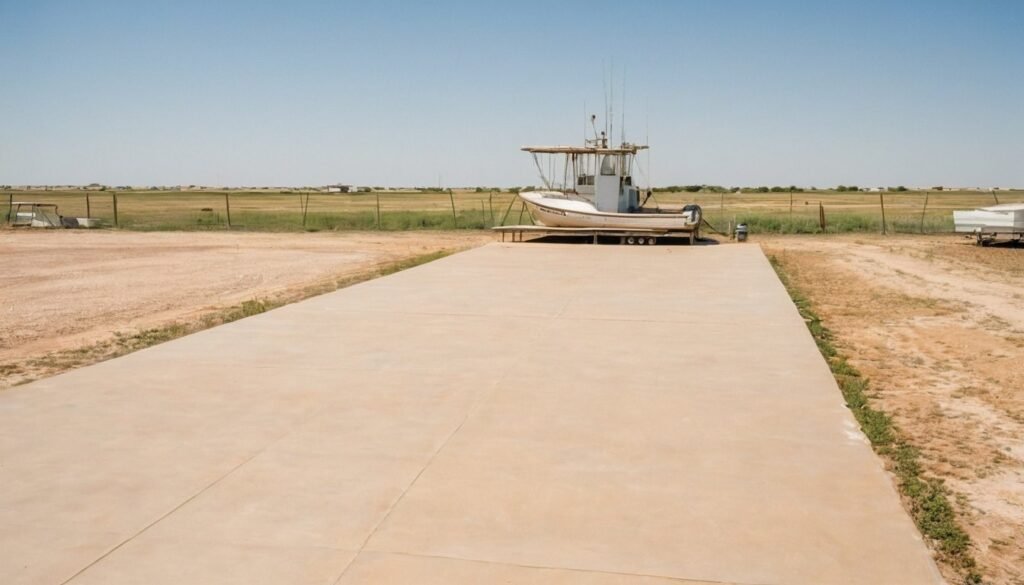
Boat trailers have narrow wheels and heavy tongue weight. A boat pad needs the same strong base and slab. Many owners add a wash area with a drain slope. Utility trailers, ATVs and lawn gear can share a pad.
See concrete driveways, shop and barn floors and concrete slabs for matching work.
RV pad concrete cost, timing and next steps
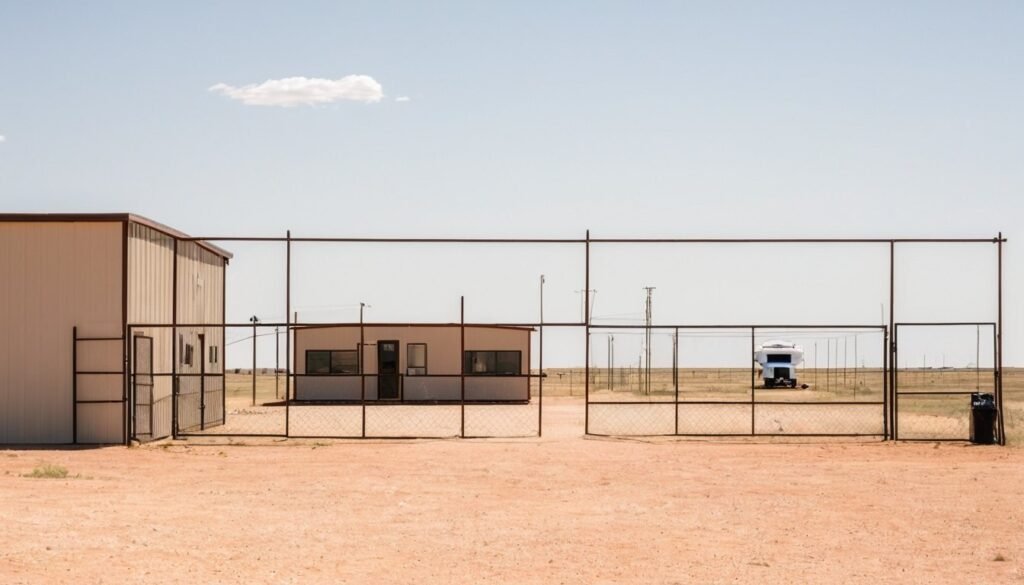
Price depends on size, thickness, steel, site work and extras like a wash drain. Most pads take one to two days to pour. Park a light trailer after about a week and a heavy motorhome after about four weeks.
Call us or use the contact page for a free written estimate.
RV Pad Concrete questions answered
How thick should RV pad concrete be?
For most RVs, trailers and campers, five inches is a good minimum, and six inches is better for large motorhomes and fifth wheels. A normal driveway is four inches thick, and that is not enough for a heavy rig that sits in one spot for months. The weight of an RV rides on four to eight small tire patches, which puts a lot of stress on the concrete.
Thickness works with the base and the steel. We pack a compacted base and place rebar or heavy wire mesh inside. If your RV is heavier than average, tell us its weight and number of axles, and we will design the pad to carry it. Fill small cracks early with a flexible sealant, because water that gets into a crack in winter freezes and makes it bigger. Sandy and clay soils behave differently, and we check what is under your yard before we decide on thickness and base.
How big should RV pad concrete be?
Measure your RV from bumper to bumper and add at least three to four feet on each side, front and back. A pad the exact size of the rig leaves you standing on dirt when you open the doors or hook up utilities. Extra room also gives space for chairs, a grill or storage bins.
Think about slide outs and awnings, which stick out several feet. Also plan how the RV will back in. Tight turns can crush the edge of the concrete, so we may flare the entry or widen the apron. We can mark the pad with paint so you can see it before we pour. The sound of a crew finishing at the end of a long day on a flat, smooth slab is a good one, and it is what we aim for on every job. If a permit or approval is needed, we help you understand the steps so the job is not held up later.
Can I pour RV pad concrete over my existing driveway?
In most cases, no. A thin new layer over an old driveway does not give the strength an RV pad needs. The old slab may be cracked, uneven or too thin. A new layer can crack along the same lines.
We can pour a new pad next to your driveway and connect it with a wide apron. If your old slab is thick and in good shape, we may use part of it as the approach. We check the thickness and the condition before we decide. When old concrete is weak, we suggest removing it and pouring one new slab built for the load. See concrete removal. Pouring concrete near trees takes care, and we keep slabs away from big roots where we can and thicken them where we cannot. If you notice puddles that stay for days after rain, tell us, because that spot needs a better slope before anything is built over it.
Do you pour pads for boats and utility trailers too?
Yes. Boat pads, utility trailer pads, lawn equipment pads and carports all work the same way. Heavy loads need a strong slab, and light loads can use a thinner one. We ask what will park there, how much it weighs, how often it moves and how you will wash or work on it.
For boats, a slight slope and a drain area make washing easier, and a rough broom finish gives grip. If you plan to park a work truck or a tractor, we may increase thickness and steel. Many customers have an RV and a boat, so we can design one pad with sections for each. Curing means keeping the surface damp or covered after finishing, and it matters as much for strength as the mix itself. Every job gets a final walk through, where we check the finish, the edges and the slope with you before we leave. Walking the site together is the best way to find problems early, and we are glad to do it at no charge as part of your free estimate.
How long before I can park on new RV pad concrete?
Wait at least seven days before you park a light trailer or small camper. Wait 28 days before you park a heavy motorhome, a large fifth wheel or a loaded trailer. Concrete gains most of its strength over four weeks, and a heavy load too soon can crack the slab or leave marks.
Weather affects the cure. We tell you the exact date when we finish the pour. If you need to bring your rig home sooner, tell us, and we can talk about pouring in two stages. Patience here pays off for decades. A lighter color stays cooler under bare feet in July, which is worth thinking about for patios, pool decks and walks. Leaving a small gap or sleeve for future pipes, wires or posts now is much easier than cutting concrete later. Clay soil moves as it gets wet and dry, which is why a compacted base and steel inside the slab are never optional on our jobs.
Does RV pad concrete need drainage planning?
Yes, and it is one of the most important parts. Water that runs under a pad can wash out soil and leave hollow spots. Water that stands on top can freeze and thaw, stain the surface and make it slippery. We slope the pad about one quarter inch per foot so rain runs off, away from your house and your neighbor.
Lubbock gets heavy rain in short bursts, and flat lots hold water. We look at where water goes on your lot. A small swale, a drain pipe or a gravel edge can help. If your RV has a water hookup, we also plan where wash water will go. Keep gutters clean and downspouts extended, because roof water pouring next to a slab can wash out the base. A level slab is easy to see, and a slab with a proper slope is just as important, because water needs somewhere to go.
Ready for a free estimate? Call (806) 541-4636 or use the estimate form. Lubbock Concrete gives clear written estimates for patios, slabs and driveways across the South Plains.